

Why Smart Homeowners Are Buying Thermal Cameras Before Calling a Tradie
Last updated: April 29, 2026
Thermal cameras for home inspection and DIY maintenance help you see temperature problems your eyes normally miss: heat loss, draughts, overloaded plugs, warm breakers, HVAC imbalance, mechanical friction, hot electronics, pet heat signatures in dark areas, and suspicious cold patches that deserve a closer look. They do not replace licensed electricians, plumbers, mechanics, building inspectors, or pest specialists. They do something simpler and often more useful: they show you where to look first.
That first clue matters. Most household and workshop problems begin with guessing. A room feels cold. A socket looks fine but worries you. A car smells hot after a drive. A business fridge works harder than usual. A pet disappears into a dark shed. Something moves in the roof space and the whole house suddenly becomes a detective agency with worse lighting.
A thermal imaging camera turns those invisible heat patterns into a visible image. A thermal camera multimeter goes one better: it shows heat and still works as a practical electrical meter. That is the point of the Normanharvey TOD 10P range. It is not just “Predator vision for the shed,” although yes, that part is fun. It is a diagnostic tool that earns its drawer space.
For this article, we are focusing only on the main tools that fit the search intent: the TOD 10P™ S15, TOD 10P™ S14, TOD 10P™ S13, and the Plissken™ 200° 2MP Steerable Articulating Snake Camera Inspection Endoscope. At the time of writing, each of the thermal camera multimeter offers includes a free Plissken endoscope option with the multimeter bundle. Always check the current product page and cart offer before purchase, because bundles and prices can change. Sensible, boring sentence. Useful though.
Quick Answer: Why Choose a Thermal Camera Multimeter?
A thermal camera multimeter is useful because heat often shows where the problem is, while the multimeter helps confirm the electrical side of the story. For homeowners, mechanics, tradies, business owners and new homeowners, that combination can be more practical than buying a standalone professional thermal camera first.
🌡️ See Heat
Find hot spots, cold patches, heat loss, friction and abnormal component temperatures.
📟 Test Electrics
Use multimeter functions for practical fault-finding instead of relying on the heat image alone.
🔍 Inspect Inside
Use the free Plissken endoscope to look inside cavities, engines, ducts, panels and tight spaces.
✅ Decide Better
Fix it, monitor it, document it, or call the right professional with better evidence.
Best First Pick: TOD 10P™ S15 Thermal Camera Multimeter
The TOD 10P™ S15 is the strongest first pick in this article because it combines a 256 × 192 infrared sensor, a 3.5-inch screen, a 19999-count digital multimeter, NCV, logging and IR image storage. For practical users who want a serious home, workshop and vehicle diagnostic tool without jumping straight into expensive standalone professional thermal-camera pricing, this is the model to look at first.
The S15 is the one I would lead with for homeowners who like doing things properly, mechanics who need fast visual clues, tradies who want evidence before opening something up, and business owners who want to check equipment before it becomes downtime. It is also the one that makes the strongest comparison against some mainstream standalone thermal cameras because the resolution and combined toolset are the story.

S15 Value Snapshot
Using the supplied AUD pricing and late-April 2026 AUD/USD exchange references, the S15 sits under roughly US$400 before any taxes, shipping, bank fees or exchange-rate movement. That matters because some branded standalone thermal cameras with lower thermal resolution are listed well above A$1,000.
S15
256 × 192
Infrared sensor resolution listed in the product title, plus multimeter functions, NCV, logging and IR image storage.
Practical Bundle
Thermal + Meter + Scope
At time of writing, the multimeter offer includes a free Plissken endoscope option for seeing into tight spaces.
Main Use
Diagnose First
Find the hot or cold clue, then inspect or test before cutting, pulling, replacing or paying call-out fees.
The S15 is the “start with the actual problem” tool. Heat shows where the stress is. The multimeter helps confirm the electrical behaviour. The endoscope lets you look inside the cavity, engine bay, duct, panel or awkward void where the problem may be hiding.
That is why it is useful for more than one audience. A homeowner can scan a cold wall and a hot power board. A mechanic can compare wheel hubs, fuses and relays. A business owner can check chargers, fridges, motors and equipment. A new homeowner can stop treating every creak, stain and warm plug like a financial jump scare.
The S14 and S13: Better Choices If You Want to Spend Less
The S14 and S13 are the more budget-conscious thermal camera multimeter options in this range. They still suit home inspection, DIY maintenance, electrical checks, electronics repair, HVAC clues and general fault-finding, but the S15 is the stronger lead product if you want the highest-positioned option in this article.
TOD 10P™ S14 Automatic FLIR Thermal Camera Multimeter
The S14 is a strong middle option for serious DIYers, home maintenance users, workshop owners and practical tradies. It is relevant for pipeline heating checks, electronics inspection, HVAC work, floor heating clues, general electrical testing and mechanical troubleshooting. It belongs in the “I use tools often enough to care, but I do not need a professional inspection-reporting camera yet” category.

TOD 10P™ S13 Automatic FLIR Thermal Camera Multimeter
The S13 is the lower-cost entry point into the thermal camera multimeter idea. It suits homeowners, new homeowners, dads, DIYers and repair-minded buyers who want thermal imaging plus electrical testing in one tool without moving into higher professional camera pricing. It is also the model that makes the “learn first, upgrade later only if needed” logic very clean.

The Free Companion Tool: Plissken™ 200° Steerable Endoscope
The Plissken™ endoscope is the logical partner for a thermal camera multimeter because the thermal camera shows the suspicious heat pattern, and the endoscope lets you physically look inside the hidden space. That makes the bundle far more useful for plumbing, automotive work, HVAC, machinery, walls, ducts, cavities and awkward “something is in there” situations.
Thermal imaging says, “something interesting is happening here.” The endoscope says, “fine, let’s actually look.” That sequence is how you avoid unnecessary tearing apart. It is also how you avoid standing over an engine bay pretending your eyes can bend around corners. They cannot. The endoscope can.
Plissken™ 200° 2MP Steerable Articulating Snake Camera Inspection Endoscope 1920 x 1080P 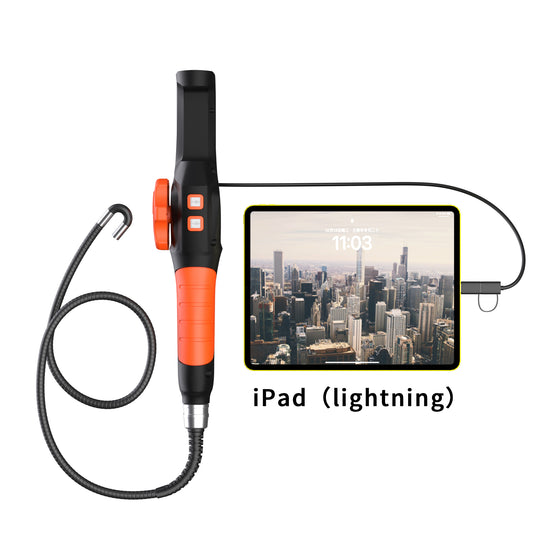
Graphic: The Smart Diagnosis Sequence
The multimeter and endoscope bundle makes sense because each step answers a different question. This is the practical flow.
1. Scan
Find the abnormal hot or cold pattern.
2. Test
Use the meter to check the electrical clue.
3. Inspect
Use the endoscope to see inside the hidden space.
4. Decide
Fix, document, monitor, or call the right professional.
What Can a Thermal Camera Actually Spot?
A thermal camera can spot temperature differences across surfaces, components, animals, tools, vehicles and equipment. It can help reveal electrical hot spots, mechanical friction, heat loss, HVAC imbalance, moisture clues, hot electronics, vehicle problems and warm-bodied pets or animals in dark accessible areas.
Important distinction: a thermal camera does not see through solid walls like an X-ray. It detects surface heat patterns. That means it can show clues on the wall, ceiling, floor, vehicle, pipe, vent, appliance or equipment surface. Those clues can then be confirmed with another tool, visual inspection, or a qualified professional.
Graph: Problems a Thermal Camera Can Help Spot
A good thermal imaging camera is broad-use. The bars below show where thermal imaging is strongest for practical home, workshop, vehicle and animal-finding tasks.
Hot plugs, overloaded power boards, warm breakers, hot relays, fuses, terminals, chargers and suspicious electrical components.
Cold window edges, door gaps, missing insulation, roof hot spots, uneven wall temperatures and comfort-killing draught paths.
Weak vents, duct leakage clues, uneven cooling, floor heating imbalance, radiator checks and air-conditioning performance patterns.
Bearings, pulleys, brakes, motors, wheel hubs, U-joints, belts, compressors, pumps and parts running hotter than they should.
Hot PCB components, battery packs, chargers, control boards, appliance modules and electronics quietly cooking themselves.
Cold patches, damp-looking areas, roof leak clues, plumbing traces and suspicious wall or ceiling zones that deserve closer checking.
Warm pets in dark yards, sheds, roof spaces, under decks, around engines and in accessible voids. It can also help reveal possible rodent or animal movement by heat signature, but not through solid walls.
Alternators, batteries, relays, fuses, cooling systems, hub temperatures, brake drag, chargers, inverters and workshop mysteries.
Important: thermal cameras detect surface temperature differences. They do not see through solid walls. They help you spot clues fast, then confirm the issue with the right tool or a qualified professional.
What Is a Thermal Imaging Camera?
A thermal imaging camera is an infrared camera that detects surface temperature differences and turns them into a visible colour image. It reads infrared radiation from surfaces and displays heat patterns as colour palettes, numbers and saved images.
Energy.gov explains that thermography, also called infrared scanning, is used by energy auditors to detect thermal defects and air leakage in building envelopes. The same guide notes that thermograms of electrical systems can detect abnormally hot connections or components, and thermograms of mechanical systems can detect heat from excessive friction. That is exactly why thermal cameras are useful beyond one trade or one room. Energy.gov’s thermographic inspections guide is a clean source on this.
In plain language: a thermal camera does not make you a superhero. It just removes one layer of blindness. That is still a very good start.
Thermal Camera vs Infrared Thermometer
An infrared thermometer gives you one temperature point. A thermal camera gives you a whole temperature picture. If you already know exactly where the problem is, a thermometer can help. If you are still searching, a thermal imaging camera is far more useful.
| Tool | Best For | Weakness |
|---|---|---|
| Infrared thermometer | Checking one known spot | Easy to miss the fault if you aim at the wrong place |
| Thermal imaging camera | Finding hot and cold patterns across a wider area | Needs interpretation and confirmation |
| Thermal camera multimeter | Thermal scanning plus practical electrical testing | Not a replacement for specialist professional inspection reporting |
That last row is the important one. For homeowners, mechanics and tradies, the thermal camera multimeter is often the more logical first tool because problems rarely stay in one category. A hot connection may need a thermal image and an electrical reading. A warm relay may need temperature comparison and voltage checks. A suspicious wall patch may need thermal imaging first, then an endoscope second.
Why Would a Homeowner Need a Thermal Camera?
A homeowner needs a thermal camera when a problem is easier to find by temperature than eyesight. That includes heat escaping from windows, cold patches from draughts or possible moisture, hot plugs, overloaded power boards, HVAC imbalance, appliance stress, and animals hiding in dark accessible places.
Home maintenance is expensive because uncertainty is expensive. The wall stain might be nothing. The warm plug might be normal. The cold room might be a duct problem, an insulation problem, or one dramatic window seal quietly betraying the household. Thermal imaging does not solve everything, but it cuts through the first fog of guessing.
| Area | What a Thermal Camera Can Show | Why It Helps |
|---|---|---|
| Windows and doors | Cold edges, draught paths and uneven seals | Helps target weather stripping, caulking or door seals |
| Ceilings and walls | Temperature differences from insulation gaps or moisture clues | Helps choose where to inspect further before cutting anything open |
| Electrical areas | Hot plugs, hot boards, warm breakers and stressed components | Helps spot potential danger signs early |
| HVAC vents | Uneven output and airflow temperature differences | Helps separate comfort issues from equipment issues |
| Garage and workshop | Hot batteries, bearings, chargers, tools and electronics | Useful for maintenance, diagnosis and safety checks |
| Yard, shed and roof-space access | Warm pets, animals or possible rodent activity in accessible areas | Helps locate heat signatures in dark or awkward spaces |
Infographic: Where Thermal Imaging Helps Most
This is why thermal cameras become addictive once you own one. They are useful across the house, garage, workshop, car, outdoors and even for finding warm-bodied pets or animals in dark areas.
🏠 Home
- Insulation gaps
- Draughts and heat loss
- Moisture clues
- Hot outlets and appliances
- Ceiling and wall patterns
⚡ Electrical
- Hot plugs
- Warm breakers
- Overloaded boards
- Bad connections
- Hot relays and fuses
🔧 Mechanical
- Bearings
- Brakes and hubs
- Motors
- Pulleys and belts
- Friction hot spots
🌬️ HVAC and Plumbing
- Uneven vent output
- Duct leakage clues
- Floor heating patterns
- Pipe route clues
- Cooling and heating imbalance
🐶 Pets and Animals
- Find pets in the dark
- Check sheds and yards
- Spot animals under decks
- See heat in accessible roof spaces
- Pick up warm movement in visible areas
🚗 Vehicle and Workshop
- Battery and alternator heat
- Brake drag
- Fuse and relay checks
- Cooling system clues
- Electronic module heat
Can Thermal Imaging Find Pets, Rodents and Animals?
Yes, thermal imaging can help find warm-bodied pets, animals and possible rodent activity when the heat signature is visible to the camera. It is useful for dark yards, sheds, under decks, around vehicles, roof-space access points and other areas where the camera has a line of sight.
This is one of the underrated uses. A thermal camera can help spot a pet hiding in a dark corner of a yard, a warm body under a deck, a cat tucked behind stored boxes, or possible animal heat around an accessible entry point. It can also help around vehicles because small animals sometimes hide near warm engine bays. Charming in theory. Expensive in practice.
The honest limit: it cannot see through solid walls, thick insulation or sealed structures. It can detect heat patterns on surfaces or visible warm bodies. If you suspect rodents, use thermal imaging as a clue-finding tool, then confirm with visible inspection, entry-point checks, droppings, noise patterns, camera traps or pest-control advice.
Thermal Cameras Compared: Normanharvey vs Expensive Standalone Options
Professional FLIR thermal cameras are serious tools, but many homeowners and mechanics do not need to start with a dedicated inspection-reporting camera. If you need formal reports, inspection workflows, cloud documentation, certification and daily professional thermography, buy the correct professional equipment. If you need practical home, car and workshop diagnosis, a thermal camera multimeter can make more sense.
Here is the comparison that matters. Australian reseller listings show the FLIR C5 Compact Thermal Camera at A$1,534.50 with 160 × 120 thermal resolution, and the FLIR E5 Pro at A$2,965.00 with 160 × 120 thermal resolution. FLIR’s official E8 Pro page positions the E8 Pro as a professional tool for locating electrical, mechanical and building problems, with inspection/reporting workflow features through FLIR Ignite and Thermal Studio. FLIR’s E8 Pro page is useful context for what professional reporting tools are built to do.
The TOD 10P S15 is different. It is not trying to be a full professional inspection-reporting system. It gives practical users a 256 × 192 thermal camera, multimeter functions, NCV, logging, image storage and, at the time of writing, a free endoscope option with the bundle. That means you are buying a broader diagnostic setup, not only a heat camera.
Comparison Graphic: Standalone Thermal Camera vs Thermal Multimeter Bundle
This is not a claim that one tool is right for everyone. It is a practical buyer’s comparison. Professional inspection cameras win for reporting workflow. A thermal camera multimeter bundle wins for broad everyday diagnosis.
FLIR C5 Example
160 × 120
Listed at A$1,534.50 by an Australian reseller. Strong compact branded thermal camera, but not a multimeter and not bundled with an endoscope.
FLIR E5 Pro Example
160 × 120
Listed at A$2,965.00 by an Australian reseller. Built for professional inspection workflow and reporting.
TOD 10P™ S15
256 × 192
Thermal camera plus 19999-count digital multimeter, NCV, logging, image storage and free endoscope option at time of writing.
Plain verdict: if you need pro reports, buy pro reporting gear. If you want a practical diagnostic setup for home, car, workshop and business use, the S15 bundle gives more types of tools in one purchase.
Which TOD 10P Thermal Camera Multimeter Should You Choose?
Choose the S15 if you want the strongest thermal camera multimeter in this article, choose the S14 if you want a balanced middle option, and choose the S13 if you want the lowest-cost entry into thermal camera multimeter diagnosis. All three suit home inspection, DIY maintenance, mechanics, electronics, HVAC clues and practical fault-finding.
The choice is not complicated. It comes down to how often you will use it, how much image detail you want, and whether you are buying it as a once-in-a-while household problem solver or a regular diagnostic tool.
| Model | Best For | Why Choose It? |
|---|---|---|
| TOD 10P™ S15 | Mechanics, serious DIYers, tradies, business owners, frequent users | Highest-featured option here, with 256 × 192 IR sensor positioning and strong multimeter specs. |
| TOD 10P™ S14 | Home maintenance, HVAC clues, electronics, workshops, practical tradies | Balanced middle choice for people who want capability without stepping to the flagship option. |
| TOD 10P™ S13 | New homeowners, dads, casual DIYers, first thermal camera buyers | Lower-cost entry point into thermal imaging plus multimeter diagnosis. |
Buyer Guide Graphic: Pick the Right Thermal Camera Multimeter
Start with how often you will use the tool. That gives a clearer answer than buying only by price or chasing professional-camera features you may not need.
Choose S15 If...
- You want the strongest option here
- You inspect vehicles, equipment or electronics often
- You want higher thermal detail
- You like saved evidence and logging
- You want the best “buy once, use everywhere” choice
Choose S14 If...
- You want a balanced middle option
- You do serious home maintenance
- You check HVAC, heating and electronics
- You want more than a casual gadget
- You still want sensible value
Choose S13 If...
- You are buying your first thermal camera
- You want DIY maintenance help
- You want a practical gift
- You do occasional checks
- You want the lower-cost entry point
Why Under-US$400 Matters for Thermal Imaging
Price matters because many thermal camera shoppers start by looking at professional brands, then discover that standalone inspection cameras can move well past A$1,000. If you need professional reporting, that price can make sense. If you want practical diagnosis around the house, car and workshop, the toolset matters more than the badge.
Using the supplied Normanharvey S15 AUD price and late-April 2026 AUD/USD exchange references, the S15 sits under roughly US$400 before taxes, shipping, card fees or exchange-rate movement. That is the useful framing: not “cheap toy,” not “professional report camera,” but a serious practical diagnostic bundle at a price that sits far below many branded standalone inspection-camera listings.
The bigger point is value per job. If the tool helps you avoid one unnecessary call-out, one wasted teardown, one misdiagnosed component, one dead afternoon, or one “let’s replace it and see what happens” invoice, it starts making financial sense. Very unromantic. Very effective.
Value Graphic: What You Are Really Buying
A thermal camera multimeter bundle is not only about the infrared image. It is about the chain of evidence.
Thermal Clue
See
Find abnormal heat, cold, friction, draughts, HVAC imbalance and hot electronics.
Electrical Check
Measure
Use the multimeter side to confirm the electrical story instead of trusting colour alone.
Visual Inspection
Inspect
Use the free endoscope to see into places your head, phone and optimism cannot reach.
Smarter Action
Decide
Repair, monitor, document, quote, or call the right professional with better evidence.
Real-World Uses for Homeowners
Homeowners can use thermal cameras for comfort, maintenance, safety checks and early problem detection. The best uses are windows, doors, ceilings, outlets, appliances, HVAC vents, garages, roof-space access areas and anywhere heat behaviour looks suspicious.
Find Heat Loss Around Doors and Windows
Scan around frames, thresholds, corners and seals when the inside and outside temperatures differ. Cold streaks or hot patches can point to draughts, air leakage, poor sealing or missing insulation. You do not need to attack the entire house with a caulking gun like a panicked octopus. Scan first. Fix the obvious leaks first.
Check Hot Power Boards and Plugs
Power boards, chargers and plugs often warm up in normal use, but abnormal heat compared with similar devices deserves attention. A thermal camera helps you spot the odd one out. If a socket, plug or board looks dangerously hot, stop using it and call a licensed electrician.
Spot HVAC Imbalance
Scan vents, ducts, returns, floor heating and room corners. If one vent is much weaker or warmer than the others, the problem may be airflow, duct leakage, system performance or insulation. Thermal imaging gives you the first map before anyone starts blaming the thermostat for personal reasons.
Look for Moisture Clues
Moisture can create temperature differences, especially when evaporation cools a surface. A thermal camera can help locate suspicious patches, but it does not directly prove a leak. Confirm with a moisture meter, endoscope, visual inspection or professional assessment.
Find Pets in Dark or Awkward Places
A thermal camera can help locate a warm pet in a dark yard, shed, garage, under-deck area or accessible roof-space opening. It can also help check around a warm vehicle before starting it if you suspect a small animal may be hiding near the engine area. It will not see through solid walls, but visible heat signatures can be very useful.
Real-World Uses for Mechanics and Workshops
Mechanics can use thermal imaging to compare parts under load and find abnormal heat fast. That makes thermal cameras useful for brakes, bearings, hubs, relays, fuses, batteries, alternators, wiring, cooling systems, U-joints, pulleys and electronics.
This is where the S15 plus free endoscope bundle becomes especially logical. Thermal imaging finds the suspicious heat. The multimeter checks the electrical side. The endoscope looks inside the awkward space. That is a tidy diagnostic sequence.
Brake Drag and Wheel Hub Heat
Compare all four wheels after a drive. One wheel running much hotter than the others may suggest brake drag, bearing issues or friction. Do not diagnose from colour alone. Use it as a clue, then inspect properly.
Relays, Fuses and Battery Drain
A hot relay, fuse or wire can point you toward a circuit that is working too hard or staying active when it should not. For intermittent faults, saved thermal images and logging can help build the pattern over time.
Cooling System Checks
Thermal imaging can help compare radiator areas, hoses, thermostat behaviour and heat movement around cooling components. It will not replace pressure testing or proper mechanical diagnosis, but it can show what part of the system deserves attention first.
Customer Proof
A saved thermal image can help explain a fault to a customer. “This bearing is hotter than the other side” lands better when the customer can see the heat pattern. Evidence reduces argument. Argument reduction is a legitimate business benefit.
Normanharvey Experience: The Tool That Makes People Less Blind
The recurring Normanharvey pattern is simple: practical tools make people feel capable. In the Normanharvey experience file, one customer used a thermal camera multimeter for electronics repair and immediately identified a hot caravan bearing and a battery-drain issue. Another story describes customers using thermal multimeters to see heat “like the Predator,” which is exactly the kind of useful novelty that gets people learning instead of guessing.
There is also the “half-blind electrician” moment, where a regular said he felt like he had X-ray vision after using a thermal multimeter to spot a hot wire pattern without taking the plaster off. His wife joked that he should rent himself out as “the half-blind electrician with superpowers.” That is a funny line, but the practical takeaway is better: products that make people feel competent get used more often.
Then there is the DIY confidence story. A first-time homeowner admitted they used to call an electrician for every little thing. After buying a multimeter and fixing a tripped circuit, they walked around like they had just won The Block. That is the emotional value of a proper tool. Not bravado. Not pretending to be licensed. Just less helplessness.
At Normanharvey, we prefer that kind of practical gift. A gift that sits in a drawer once is clutter. A gift that helps someone understand their house, vehicle or workshop is different. Every time they use it, it gives the gift again. That is far better than socks, unless the socks can identify an overheating relay. They cannot. We checked spiritually.
Story Graphic: Why Practical Tools Become Favourite Gifts
The best practical gifts do three jobs: they solve a real problem, teach the owner something and get used again.
1. Solves a Problem
Heat loss, hot plugs, strange car heat, battery drain, bad vents, hidden faults.
2. Teaches the Owner
You start recognising heat patterns instead of guessing at every noise, smell or stain.
3. Gets Used Again
House, garage, car, workshop, shed, pets, electronics, HVAC. One tool, many excuses.
How to Use a Thermal Camera for Home Inspection
Use a thermal camera by scanning slowly, comparing similar surfaces, saving images, and confirming suspicious patterns with another tool or qualified professional. The best scans happen when there is enough temperature difference for heat patterns to appear clearly.
Step 1: Create Temperature Contrast
Thermal cameras work best when the indoor and outdoor temperatures differ. For heat loss, scan during heating or cooling conditions. For mechanical or electrical checks, scan when the equipment has been running under normal load.
Step 2: Move Slowly
Pan slowly across the area. Do not wave the camera around like you are blessing the house with technology. Thermal imaging works best when you give the sensor time to show stable patterns.
Step 3: Compare Similar Areas
Compare one outlet with another outlet. One vent with another vent. One wheel hub with the opposite wheel hub. One battery terminal with the other. Differences are more useful when you have a fair comparison.
Step 4: Save Evidence
Use IR image storage where available. Saved images help you compare before and after repairs, explain a problem to a tradie, document equipment behaviour, or show a customer why a repair is justified.
Step 5: Confirm Before Repairing
If the thermal image suggests an electrical issue, use proper electrical testing and call a licensed electrician where required. If it suggests moisture, confirm with a moisture meter or visual inspection. If it suggests something hidden, use the Plissken endoscope. The correct order is clue, confirmation, decision. Not clue, panic, demolition.
Flowchart: Scan, Confirm, Act
This is the clean decision path for DIY maintenance and workshop diagnosis.
Look for unusual heat or cold patterns compared with nearby similar surfaces.
Compare outlet to outlet, vent to vent, wheel hub to wheel hub, or wall section to wall section.
Use the multimeter, endoscope, moisture meter, visual inspection or professional assessment where appropriate.
If it involves live mains electricity, gas, structural risk, serious water damage or legal compliance, call a qualified professional.
Store thermal images so you can compare before and after repairs or show a tradie what you found.
Safety Limits: What Thermal Cameras Cannot Do
Thermal cameras are diagnostic aids, not legal qualifications or magic vision. They help you see surface temperature patterns. They do not make unsafe electrical work safe, and they do not replace specialist inspection equipment when formal reporting is required.
- They cannot see through solid walls. They detect surface temperature differences.
- They do not prove moisture by themselves. A cold patch may be moisture, insulation, airflow or another cause.
- They do not make electrical work safe. Do not open live switchboards or mains panels unless qualified and legally allowed.
- They do not replace pest-control inspection. They can help find heat signatures, but rodent diagnosis still needs confirmation.
- They do not replace professional thermography reports. Use the right tool and trained operator when the situation requires formal inspection documentation.
Those limits do not weaken the tool. They define it. A tape measure is not a structural engineer either, yet everyone still owns one because numbers beat guessing. Thermal imaging works the same way: useful evidence, used properly.
Why This Bundle Makes Sense for Gifts
A thermal camera multimeter with a free endoscope is a strong practical gift because it feels impressive, solves real problems and keeps finding new uses. That makes it especially suitable for dads, homeowners, new homeowners, mechanics, tradies, workshop owners and people who like learning how things work.
Most gifts are consumed, forgotten or placed into the ceremonial Drawer of Mild Regret. A useful tool behaves differently. It gets pulled out when the fridge seal looks odd. It gets used when the car smells hot. It gets shown at a barbecue when someone says, “I think that window leaks air.” The owner becomes slightly insufferable for 20 minutes. This is acceptable. It means the gift worked.
That is why this article focuses on the S15, S14, S13 and Plissken endoscope only. They fit the thermal-camera search intent. They tell one clean story. See heat. Test the issue. Look inside. Decide better.
Frequently Asked Questions About Thermal Cameras
Are thermal cameras worth it for homeowners?
Yes, thermal cameras can be worth it for homeowners who want to find heat loss, draughts, hot electrical areas, HVAC problems, appliance heat issues, possible moisture clues and warm-bodied pets in dark accessible areas. They are most useful when paired with confirmation tools and sensible safety limits.
Can a thermal camera see through walls?
No. A thermal camera does not see through solid walls. It detects surface temperature differences, which may suggest something happening behind or inside a surface. Treat the image as a clue, not X-ray vision.
Can thermal imaging find water leaks?
Thermal imaging can help find temperature patterns that may suggest moisture or water movement, but it does not directly see water through walls. Confirm suspected leaks with visual inspection, a moisture meter, an endoscope or a licensed professional.
Can thermal cameras find pets or rodents?
Thermal cameras can help find warm pets, animals and possible rodent activity when the heat signature is visible to the camera. They are useful in dark yards, sheds, under decks, roof-space access areas and around vehicles, but they cannot detect animals through sealed solid walls.
Is a thermal camera multimeter better than a normal thermal camera?
For many homeowners, mechanics and DIYers, a thermal camera multimeter is more practical because it combines heat imaging with electrical testing. A dedicated professional thermal camera is better for formal inspection reports and specialist thermography workflows.
Which TOD 10P model should I choose?
Choose the S15 if you want the strongest featured model in this article. Choose the S14 if you want a balanced middle option. Choose the S13 if you want the lower-cost entry point into thermal camera multimeter diagnosis.
Is FLIR always the best thermal camera choice?
FLIR makes respected professional thermal cameras, but the best choice depends on the job. If you need professional reports and advanced workflow, a professional FLIR model may make sense. If you need practical diagnosis across home, car and workshop tasks, a thermal camera multimeter bundle may deliver better everyday value.
Does the free endoscope replace the thermal camera?
No. The thermal camera and endoscope solve different problems. The thermal camera shows suspicious heat or cold patterns. The endoscope lets you physically look inside tight spaces after you have found the area worth checking.
Final Verdict: Start With the Heat, Then Confirm the Fault
Thermal cameras for home inspection and DIY maintenance are valuable because they reduce guessing. The TOD 10P thermal camera multimeter range gives practical users a way to see heat, test electrical clues and, with the included Plissken endoscope option at the time of writing, inspect hidden areas before making a repair decision.
The S15 should be the first choice if you want the strongest option in this article. It is the model to lead with for mechanics, tradies, serious DIYers, new homeowners and business owners who want a broad diagnostic tool rather than a single-purpose gadget. The S14 and S13 keep the same practical idea at lower entry points.
Professional standalone thermal cameras have their place. If you need formal inspection reporting, buy the correct pro tool. If you want a practical heat camera, multimeter and inspection-camera bundle for real home, workshop and vehicle problems, the TOD 10P range is the cleaner first move.
See the heat. Test the circuit. Look inside. Then make the decision. That is much better than guessing, poking hot things, and learning physics through regret.
Much Love from Normanharvey
Sources and Further Reading
- Energy.gov: Thermographic Inspections
- Restoration Warehouse: FLIR C5 Compact Thermal Camera listing
- Restoration Warehouse: FLIR E5 Pro listing
- FLIR: E8 Pro Professional Thermal Camera
- Normanharvey Guide: Smart Home Security Gifts


